
Noodles & staples · Shaanxi
Biangbiang Noodles
biángbiáng面 — Belt-wide hand-slapped wheat noodles with chili oil, vinegar, garlic sprouts and often braised meat — named after the sound the dough makes hitting the counter.
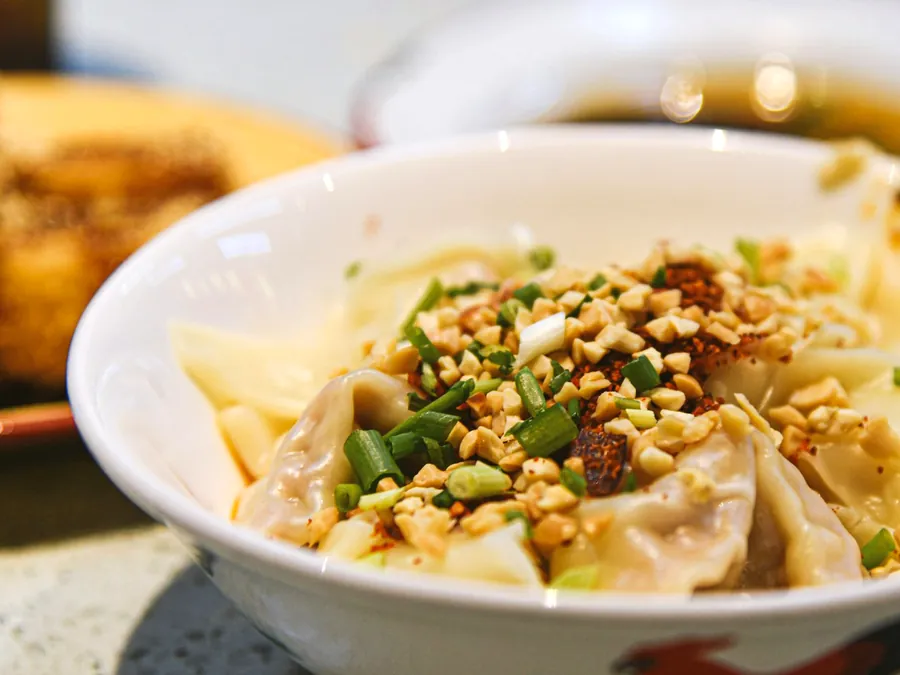
The character "biáng" is the most complicated in Chinese popular use (58 strokes, untypeable, memorised as a rhyming riddle), and the noodle is Shaanxi’s proudest export: wide as a belt, ragged-edged so the sauce pools, served dry-tossed or "sanhe yi" (three-in-one) with tomato-egg, meat and chili oil together.
The chili-oil finish is non-negotiable: Xi’ans pour it over raw garlic sprouts and vinegar so the heat arrives fragrant rather than punishing. Order it in the Muslim Quarter with a side of roast lamb, and the meal that follows will reorganise your sense of what a "noodle dish" can be.
Ordering is simpler than the menu suggests. A bowl is three or four ribbons — each 3–5 cm wide and close to a metre long, folded on top of itself — so cut them with scissors or chopsticks before the vinegar goes on. The default serve is youpo: chili flakes, minced garlic and scallion under a ladle of smoking oil poured at the table. Locals also call the same noodle kudai mian (裤带面, "trouser-belt noodles") and use both names interchangeably; say bu la if you want the chili dialled back, and add a cold side dish rather than a second bowl — one order is a full meal.
Where to eat it
- Han-style noodle shops around the Beilin district
- The streets just outside the Muslim Quarter
- Any shop pulling and slapping dough in view of the street
Named tables that do it well
- Tong Sheng Xiang — Local Institution
- De Fa Chang — Local Institution
- Fan Ji Roujiamo — Local Institution
- Lao Sun Jia — Local Institution
Routes that eat their way here
More dishes to know
- Dumplings (饺子)
- Roujiamo (肉夹馍)
- Yangrou Paomo (羊肉泡馍)
- Xinjiang Lamb Skewers (烤羊肉串)
- Big Plate Chicken (Dapanji) (大盘鸡)
- Cong You Bing (Scallion Pancake) (葱油饼)