7 days in China: what fits, and the routes that prove it
A week is enough for a serious first trip if you pick one shape and hold it. Here are the three shapes that work, and the ten existing 6–8 day routes behind them.
Count your travel days honestly before you count anything else. Seven calendar days on the ground means five full sightseeing days once the arrival and departure days are stripped out. In China that is enough for two cities done properly, or three cities done at a brisk but real pace — the classic Beijing, Xi’an and Shanghai triangle is the country’s most-run week for exactly that reason.
Distances decide the shape. Beijing to Shanghai is 4.5 hours on the daytime high-speed train or two hours by air. Beijing to Xi’an is about 4.5 hours by rail. Both are easy, and both are worth doing in daylight — the rail route into Xi’an crosses the sort of farmland and loess hills that you flew eleven hours to see.
Three shapes that work in seven days
The triangle. Beijing (3 nights) → Xi’an (2) → Shanghai (2). Terracotta Army, Great Wall, the Bund, two internal train legs, done. It is the highest-density week in the country and the one we would recommend to a first-time visitor who wants the postcard China in one pass. Our 8-day Beijing–Xi’an–Shanghai route is this shape with the pacing relaxed.
One region, done deep. A week inside a single region beats a week of transitions for many travellers: Shanghai plus the water towns and Hangzhou; Chengdu plus Jiuzhaigou; Yunnan at a slower burn; the Silk Road stretch from Xi’an to Dunhuang. You trade breadth for the chance to sit still in one or two places, which is what actually produces the stories you keep.
A city and its side trips. Base in Shanghai or Beijing for the week and radiate — Suzhou for a day, Hangzhou for two, the Great Wall and the hutongs from Beijing. One hotel, one unpacking, four or five distinct days. Travellers with children or work calls in the evenings do best with this one.
How the classic week splits, day by day
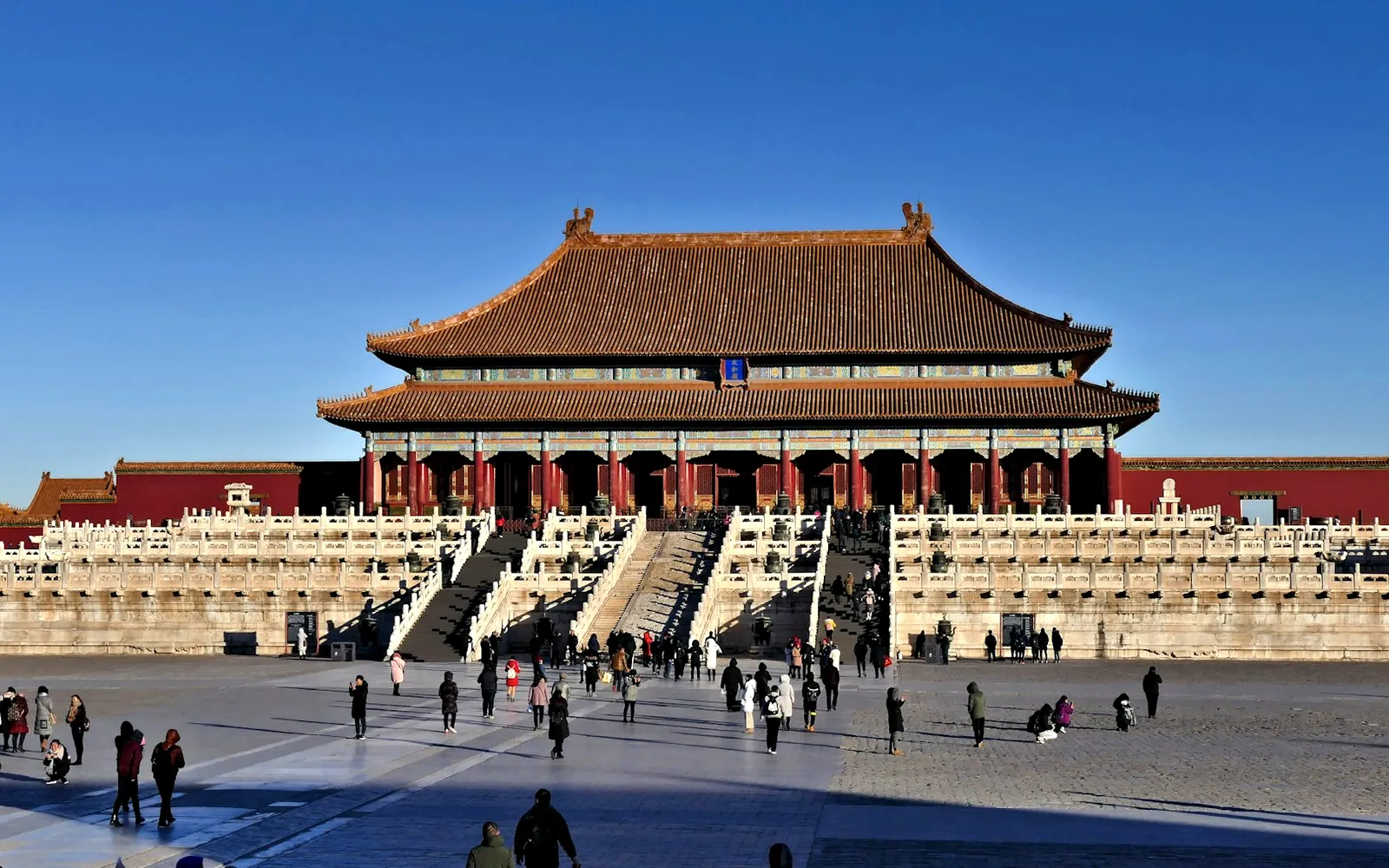
Day 1 arrive Beijing, settle, first walk through the hutongs near the hotel. Day 2 the Great Wall at Mutianyu with a driver, evening back in the city. Day 3 the Forbidden City and its squares, then the evening train to Xi’an. Day 4 the Terracotta Army in the morning and the Muslim Quarter at night. Day 5 morning train or flight to Shanghai, the Bund at dusk. Day 6 the French Concession and Yu Garden. Day 7 last morning, depart.
Swap the last Shanghai day for a Suzhou morning if gardens matter more than another city morning. The point of the pattern is not the specific stops — it is that each city keeps a full day and a half, and no day contains more than one big thing.
April to June, September to November · Balanced · Easy
The single most requested China route, and the right first multi-city trip. Three cities, two high-speed rail journeys, and the three sights that decide whether a first visit lands: the Forbidden City, the Terracotta Army and the Bund.
May to June, September to October · Relaxed · Moderate
The route the caravans actually took, now run on scheduled trains. Six days covers Xi’an, the Gansu corridor and the Mogao caves, with an overnight in Dunhuang that gets you into the desert at dawn rather than at midday with everyone else.
March to May, September to November · Balanced · Easy
The three cities that make a first trip to eastern China, plus the thing most itineraries skip: a night in a water town, after the day coaches have gone. Seven days is enough for both if you plan the transfer days properly.
April to June, September to October · Moderate · Moderate
The plateau done at the right pace: two slow days in Lhasa while the altitude settles, the Friendship Highway through Gyantse and Shigatse, and a night in the tent camp under the north face of Everest. Eight days, one permit, one horizon.
Guizhou is what Yunnan looked like twenty years ago: waterfalls without barriers, karst rivers that run green over stone, and Miao villages where the silver is still made by hand. Six days does the three highlights without a wasted transfer.
May to June, September to October · Moderate · Moderate
Xinjiang is a province the size of Western Europe with a Silk Road history to match. This route takes the southern arc: the museum and the bazaar in Urumqi, the desert oasis cities of Turpan, then the old trading city of Kashgar and the mountains that start at its edge.
May to October; July for the rapeseed bloom · Relaxed · Easy to moderate (altitude-aware)
Qinghai is the part of the plateau you can do in a week: a 2,275-metre gateway city, China’s largest lake ringed by grassland, and a salt flat that mirrors the sky. Six days runs the loop at altitude-safe pace — two nights in Xining around the drive, sunrise on the west shore, and Kumbum as the cultural anchor.
Mid-May to June for mirror-flooded terraces; September to October for gold · Relaxed · Easy to moderate
The Guangxi everyone photographs, in the right order: a city night in Guilin, a dawn above the Longji terraces while the day-trippers are still on the motorway, then the Li River cruise downstream to the karst towers of Yangshuo. Six days with no wasted transfer and one sunrise that justifies the early alarm twice over.
March to May, September to November · Balanced · Easy
The three cities that first-time visitors to China should see, in the right order, with the trains between them already worked out. This is the route we run most often, and the one we recommend for a first trip if the traveller has a week.
April to June, September to October · Balanced · Moderate
Two very different experiences that work better together than separately. Chengdu is a relaxed, edible, tea-drinking city. Jiuzhaigou is a day’s drive away and utterly unlike anywhere else in China. Six days lets you do both without rushing either.
Yes, for one region or the classic triangle. It is not enough for Beijing, Xi’an, Shanghai, Guilin and Tibet in one pass — that is a 10–14 day shape, and trying to force it into a week is the single most common way first trips go wrong.
Is Beijing–Xi’an–Shanghai too rushed in 7 days?
It is brisk but real at 8 days, which is how we build it. At exactly 7 you keep the same order and give Shanghai one night less. Two internal train legs of 4.5 hours each are the only dead time, and both run in daylight.
Should I add Guilin or Yangshuo to a 7-day trip?
Not to the triangle — Guilin needs its own flight leg and two nights to matter. If karst scenery is the reason you are coming, do Shanghai → Guilin/Yangshuo → Guilin out, and save Beijing for the next trip.
What are the best months for a 7-day itinerary?
April–May and September–October nationally. Winter weeks work for the Harbin ice angle, and the shoulder months are quieter at the Great Wall and the Terracotta Army, but July–August heat and domestic holiday weeks (early October, Chinese New Year) are the ones to plan around.
How much does a 7-day private itinerary cost?
Each route page carries a per-person starting figure from our current rate base. As a rule of thumb, a week with the triangle shape and the hotels we book sits from around US$2,500–3,500 per person including internal trains and drivers, before international flights.