
Soups & broths · Guangdong
Cantonese Congee
艇仔粥/生滚粥 — Slow-simmered rice porridge cooked until the grains dissolve — the velvet base for "sang gun" (fresh-swirled) bowls of fish, pork ball or liver. The breakfast…
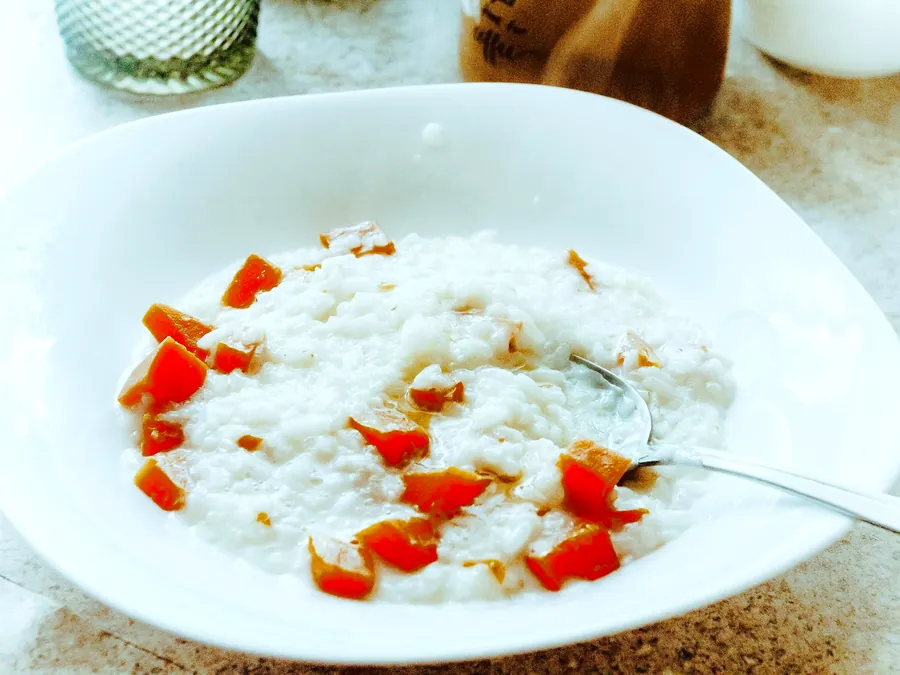
Cantonese congee is timed differently from other congees: the rice is simmered with a stock base for an hour-plus until it becomes a smooth liquid, then the raw ingredients — sliced fish, pork kidney, century egg — are swirled in at the last moment so they barely set. Youtiao (fried crullers) go on top.
The "boat congee" (ting zai juk) version carries shrimp, squid, pork skin and peanuts — a river-people’s recipe from Guangzhou’s Pearl River past. Congee shops open before dawn, and a bowl with crullers costs less than a coffee anywhere in the west.
Ordering follows the "sang gun" method: the plain rice base is simmered in bulk, then your portion is ladled into a small pot, brought back to a rolling boil and finished with raw toppings so they barely set. That is why the bowl arrives almost too hot, and why the offal in a kap dai juk (及第粥 — pork liver, kidney, intestine and hand-beaten meatball) should be eaten on the spot rather than packed up. Century egg with salted lean pork is the benchmark bowl; fish-belly congee with ginger and scallion is how locals judge a kitchen; Wu Zhanji in Liwan is the heritage name for the exam-season bowl parents still buy their children.
Where to eat it
- Wu Zhanji (Longjin Middle Rd, Liwan) — heritage kap dai juk
- Congee-and-noodle houses across Xiguan, Guangzhou
- Hong Kong congee shops off any cha chaan teng side street
Named tables that do it well
- Yu Tang Chun Nuan — Michelin 1 Star
- Jiang by Chef Fei — Michelin 2 Stars
- Imperial Treasure Fine Teochew — Michelin 2 Stars
- Taianmen Guangzhou — Michelin 2 Stars
Routes that eat their way here
More dishes to know
- Pineapple Bun with Butter (菠萝油)
- Egg Tarts (葡式蛋挞/酥皮蛋挞)
- Buddha Jumps Over the Wall (佛跳墙)
- Yangrou Paomo (羊肉泡馍)
- Guizhou Sour Soup Fish (酸汤鱼)
- Cantonese Dim Sum (广式点心)