
Dim sum & bakery · Guangdong
Cantonese Dim Sum
广式点心 — The canon of steamed, fried and baked morsels — har gow shrimp dumplings, siu mai, char siu buns, rice rolls — eaten over hours in tea-fogged dining rooms.
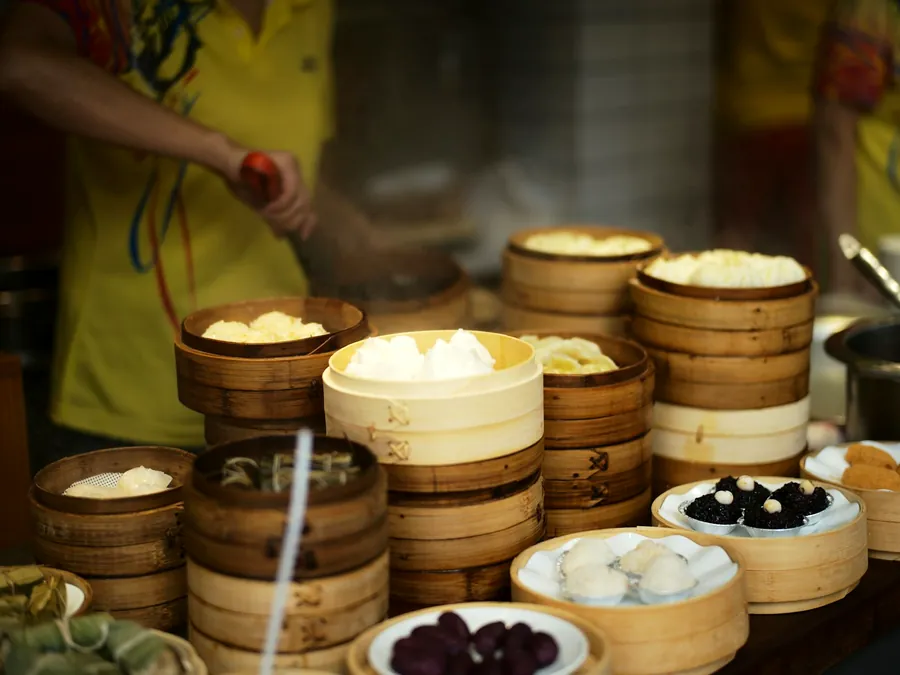
Dim sum ("touch the heart") is a meal architecture: small plates from trolleys or order sheets, drunk tea, and unhurried conversation on a weekend morning. The quality test every Cantonese applies is the har gow — the wrapper must be translucent, ten pleats, no tearing, and the shrimp snappy.
Guangzhou’s heritage houses (Tao Tao Ju since 1880, the White Swan’s Yu Tang Chun Nuan) and Hong Kong’s star dim sum counters (Tim Ho Wan, and the three-starred Lung King Heen) bracket the whole range — from two-dollar bamboo steamers to banquet gilding. Yu cha is the word for the ritual; learn it.
Where to eat it
- Tao Tao Ju (Guangzhou, since 1880)
- Yu Tang Chun Nuan (Guangzhou, Michelin star)
- Tim Ho Wan (Hong Kong, the famous cheap star)
- Lung King Heen (Hong Kong, three stars)
Named tables that do it well
- Yu Tang Chun Nuan — Michelin 1 Star
- Jiang by Chef Fei — Michelin 2 Stars
- Imperial Treasure Fine Teochew — Michelin 2 Stars
- Taianmen Guangzhou — Michelin 2 Stars
Routes that eat their way here
More dishes to know
- Claypot Rice (煲仔饭)
- Cantonese Congee (艇仔粥/生滚粥)
- Wonton Noodles (云吞面)
- Hong Kong-Style Milk Tea (港式奶茶)
- Xiaolongbao (小笼包)
- Shengjianbao (生煎包)