
Michelin 2 Stars · Beijing
King’s Joy
京兆尹 — A two-starred vegetarian temple in a restored hutong courtyard beside the Lama Temple. Seasonal tasting menus built around mushrooms, yam and…
Why we list it
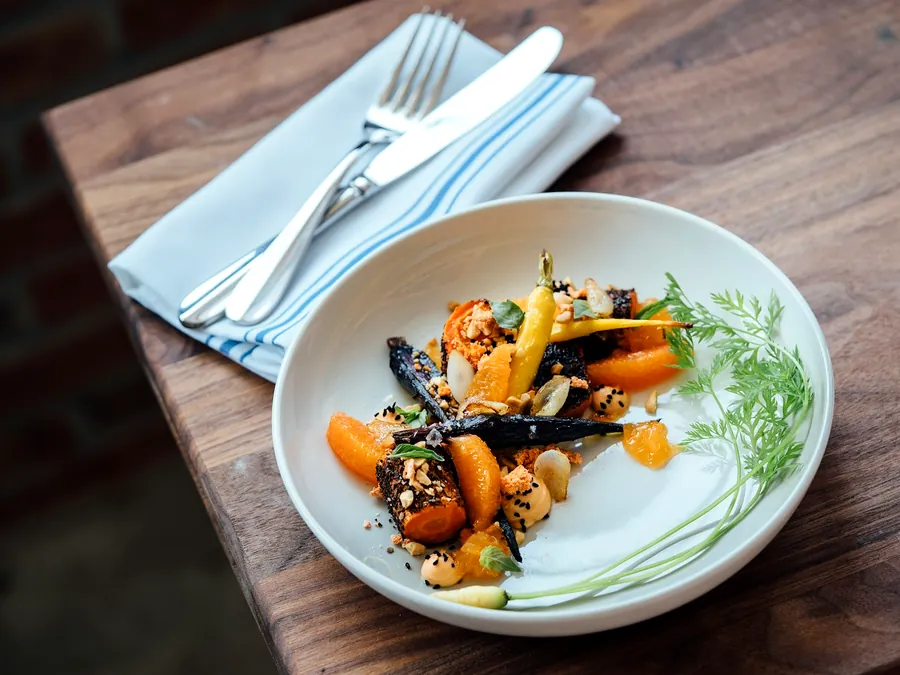
A two-starred vegetarian temple in a restored hutong courtyard beside the Lama Temple. Seasonal tasting menus built around mushrooms, yam and hand-made tofu, with a devoted following among visiting chefs.
Booking note: The courtyard rooms are the ones to request.
What to order
- Morel and yam consommé
- Hand-ground tofu with truffle
Vegetarian cooking with no substitutes
King’s Joy is the table that settled the argument about Chinese vegetarian food. There is no mock meat here, no gluten shaped into duck, no apology in the menu language. The kitchen treats vegetables, mushrooms, bean curd and grains as a complete cuisine with its own technique — which is, historically, what temple cooking always was.
The lineage is Buddhist monastery cooking, and its rules shaped the flavours: no garlic, onion or leek in the strict tradition, so aroma comes from fermentation, dried mushrooms, bamboo and aged soy instead. The result is clean and savoury rather than bland, and it explains why the room has held two stars in a city that measures restaurants by their meat.
A courtyard on a hutong
The setting matters as much as the food. King’s Joy occupies a restored courtyard house off Wudaoying Hutong, a short walk from the Yonghegong Lama Temple, and dinner is served across several rooms arranged around planted courts. In summer the tables spill outside; in winter the glass corridors are the best seats in the neighbourhood.
Come early enough to walk the hutong before sitting down. Wudaoying is one of the few intact lanes left east of the Drum Tower, and the temple at its end is the reason the area has always been vegetarian-friendly. The combination — temple, lane, courtyard, meat-free dinner — is a coherent half-day rather than a single meal.
Booking and how to choose
Book three to seven days ahead; the courtyard rooms are the ones to request, and they go first. The set menus are the sensible way in, and the kitchen will build a shorter version for a light appetite if asked at booking rather than at the table.
Tea is the pairing to take seriously here — the list is long, and the service will sequence it against the courses if you say so. The morel and yam consommé and the hand-ground tofu are the two dishes that show the kitchen’s range; the seasonal vegetable plates change often enough that regulars order by what is in season rather than by name.
What to know before you go
The courtyards are open to the sky, so the room changes with the season — best in spring and autumn, and worth asking for an indoor table in January. The kitchen closes between lunch and dinner, and the last seating is earlier than at most Beijing restaurants, so an eight o’clock arrival is not always possible.
The hutong outside is narrow and taxis will stop at the corner; the short walk in is part of the evening. Booking under a Chinese name, or having the hotel call, is faster than the English-language channel.
Dishes to know in Beijing
- Peking Duck (北京烤鸭)
- Zhajiang Noodles (炸酱面)
- Jianbing (煎饼果子)
- Tanghulu (冰糖葫芦)
More tables in Beijing
- Gastro Esthetics at DaDong — Michelin 1 Star
- Sheng Yong Xing — Michelin 1 Star
- Lei Garden (Jinbao Tower) — Michelin 1 Star
- Poetry.Wine (Shijiu) — Michelin 1 Star
- Bianyifang — Local Institution
- Fu Chun Ju — Michelin 1 Star