
Michelin 3 Stars · Beijing
Xin Rong Ji (Xinyuan South Road)
新荣记(新源南路) — The flagship of China’s most decorated regional fine-dining group, holding three Michelin stars for its coastal Taizhou cooking. Dry-aged yellow…
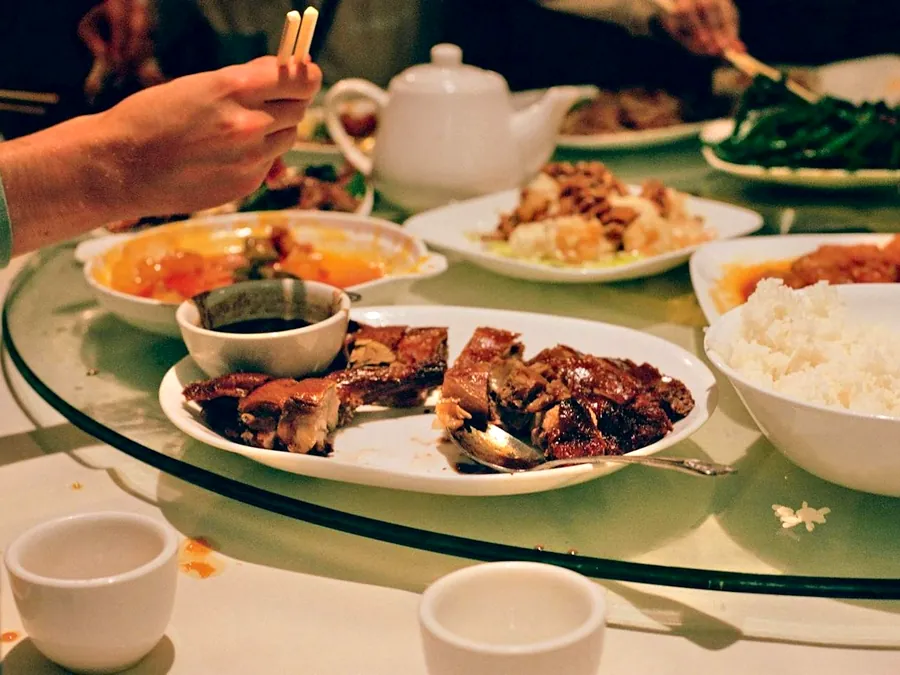
Why we list it
The flagship of China’s most decorated regional fine-dining group, holding three Michelin stars for its coastal Taizhou cooking. Dry-aged yellow croaker, braised sandfish and homestyle small plates served with quiet, obsessive precision.
Booking note: Book one to two weeks ahead; private rooms go first.
What to order
- Dry-aged yellow croaker
- Braised sandfish soup
- Rice-web sea urchin
A Taizhou seafood kitchen in the capital
Xin Rong Ji grew out of Linhai, on the Taizhou coast in Zhejiang, and never adopted the banquet playbook of Beijing or Cantonese fine dining. The kitchen is built around a short list of seafood and village dishes, cooked to order and priced like produce rather than ceremony — which is why a three-star meal here feels closer to a great fish house than to a state banquet.
The group now runs rooms across Zhejiang, Shanghai and Beijing. The Xinyuan South Road flagship is its most complete larder: live tanks for fish and crab, a dry-ageing cabinet for yellow croaker, and a rice programme that changes with the season. Regulars ask for the private rooms first; they set the pace, and the pace here is deliberately slow.
Brine, lard and the Taizhou idea of a good fish
Taizhou cooking is not subtle in the way Cantonese cooking is subtle. It is direct: soy, sugar, Shaoxing wine, a spoon of lard, and a short braise that leaves the ingredient recognisable. The region’s home-style braises are the backbone, and the skill shows in how little the kitchen does — the fish arrives whole, the sauce clings rather than pools, and almost nothing is thickened with starch.
The other pillar is preservation. Salted and air-dried fish, cured pork, pickled greens and fermented beans give the menu its savoury depth without chilli or spice. Order one cured item beside one fresh fish and the logic of the cuisine becomes obvious: the meal is the sea on one side, the larder on the other, and rice holding the two together.
Booking, ordering and what to skip
Reserve one to two weeks ahead; walk-ins are theoretical. Tell the kitchen your appetite honestly rather than ordering by the dish — portions are generous and over-ordering is the house’s only real trap. English is workable, but a Chinese-speaking companion or a hotel concierge makes the ordering noticeably better.
The dry-aged yellow croaker is the benchmark and worth the supplement; the sand-clam noodles are the comfort dish; whatever sea urchin rice is in season should be taken. Lunch is quieter, cheaper and draws on the same tanks as dinner, which makes it the informed choice if you are fitting the meal into a route day.
Dishes to know in Beijing
- Peking Duck (北京烤鸭)
- Zhajiang Noodles (炸酱面)
- Jianbing (煎饼果子)
- Tanghulu (冰糖葫芦)
More tables in Beijing
- Chao Shang Chao — Michelin 3 Stars
- Jing Ji — Michelin 2 Stars
- King’s Joy — Michelin 2 Stars
- Gastro Esthetics at DaDong — Michelin 1 Star
- Sheng Yong Xing — Michelin 1 Star
- Lei Garden (Jinbao Tower) — Michelin 1 Star